
Multidisciplinary Designer
Now Playing
Kubsxyz
Working with a team on creating the future of work by superpowering organizations with cloud-based teams
You can always reach me at
+234-706-730-8739
Jojiverse is a system designed to make the metaverse understandable, usable, and grounded in human reality. While many virtual environments ask users to adapt to unfamiliar logic, Jojiverse aligns digital experiences with behaviours people already recognise and trust.
The problem it addresses is not access, but perception. The metaverse is often rejected because it feels abstract, detached, and difficult to relate to. Jojiverse reduces that distance by connecting virtual participation to familiar real world structures such as exchange, ownership, and structured interaction. Built in phases, the system gradually syncs the universe with the metaverse, allowing users to enter, orient themselves, and participate without abandoning what already makes sense.
By acting as a bridge between the seen and the unseen, Jojiverse turns complexity into clarity. It does not attempt to reinvent human behaviour. Instead, it extends it, creating a more intuitive path into the multiverse and laying the foundation for trust, continuity, and long term engagement.

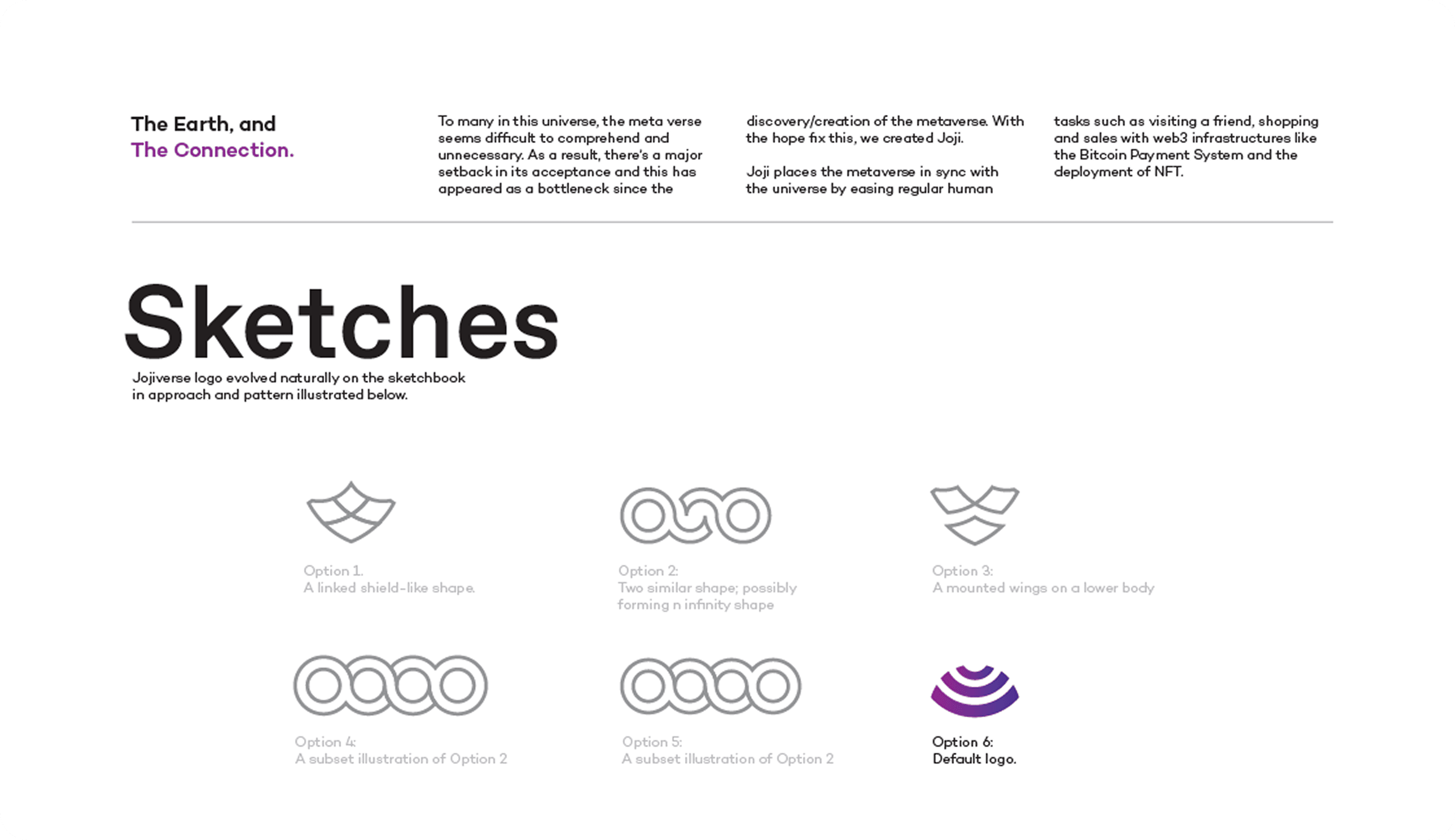
The sketch exploration reflects this philosophy. Each option is not a stylistic experiment but a structural one. The repeated circular forms suggest continuity, systems, and loops, ideas tied to ongoing interaction rather than one-off moments. The linked and overlapping shapes point to connection, interoperability, and shared space, reinforcing Joji’s role as a bridge between worlds.
Some sketches explore symmetry and balance, echoing the idea of syncing two realms. Others introduce layering and repetition, referencing scalability and phased growth, a system designed to expand over time without losing coherence. The shield-like and winged forms hint subtly at trust, protection, and guidance, which are critical for users entering unfamiliar digital environments.
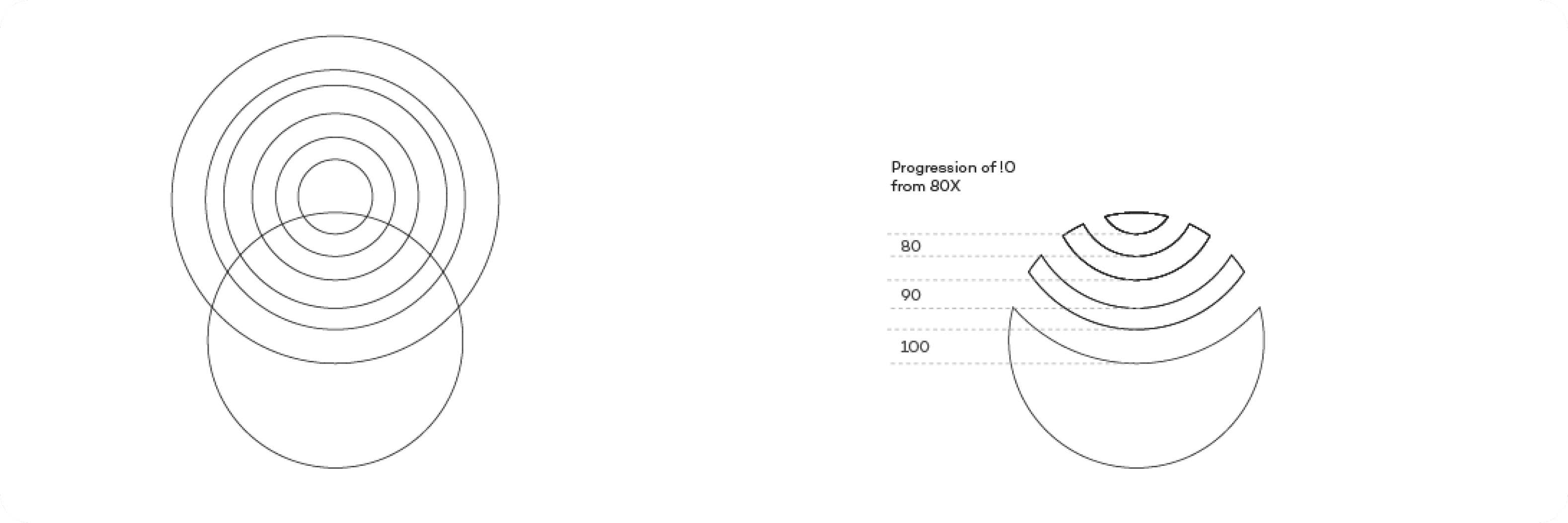
The identity reflects this same thinking. The logo is not decorative but infrastructural. Its ripple-like form suggests impact, showing how actions in the metaverse extend outward into the universe. The latitudinal stroke illustration, paired with restrained shades of purple and black, speaks to depth, scale, and influence without excess. A globe-like form emerges through an implied, non-visible longitudinal line, representing Jojiverse’s mission to make tangible impact from what is often perceived as invisible. The final mark also carries a subtle, wi-fi-like rhythm, reinforcing the core function of the brand: connection. Not between devices, but between worlds.
The sketches that led to this form explored repetition, overlap, balance, and continuity, visual expressions of systems that scale, adapt, and hold together over time. The final logo distils these ideas into a restrained, defensible symbol designed to support a growing ecosystem rather than compete with it.
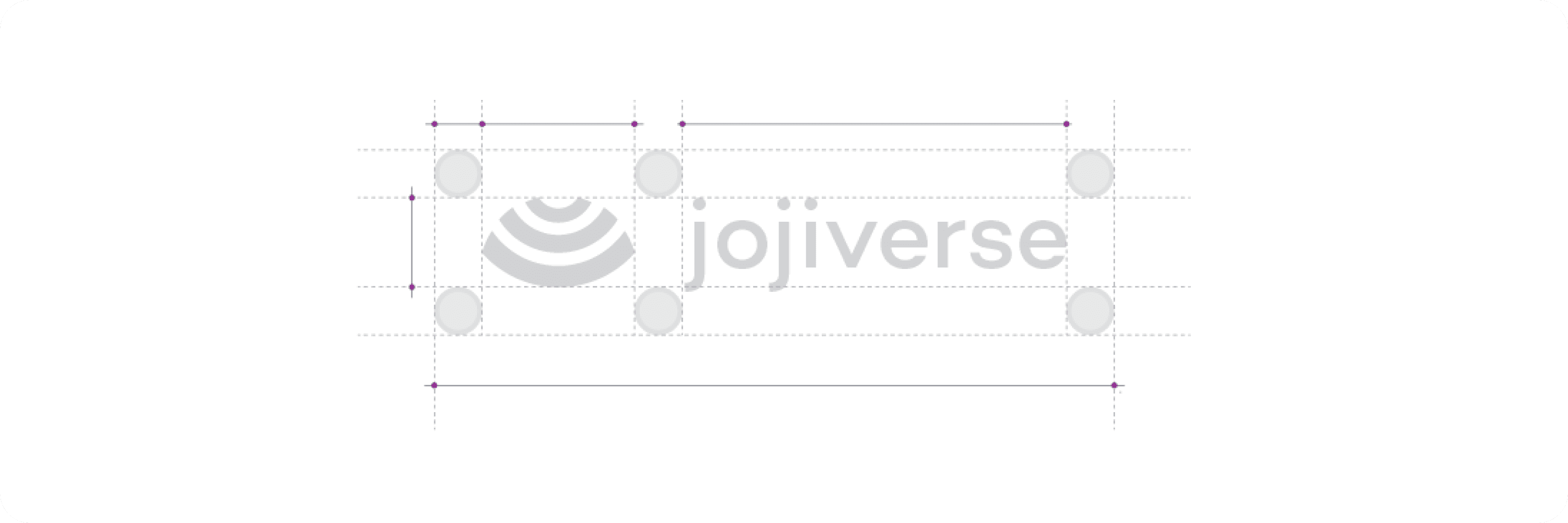
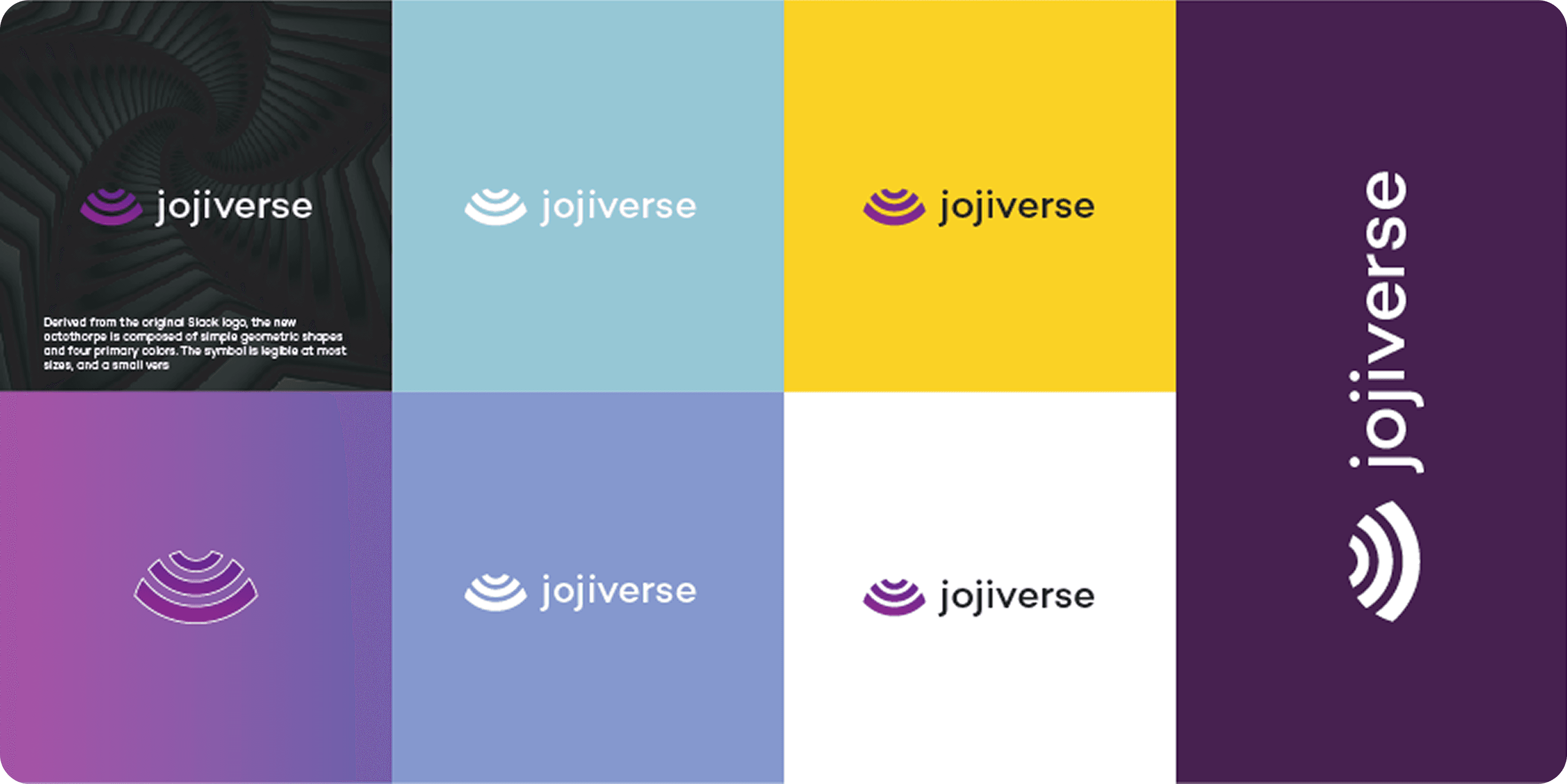
The Jojiverse logo is designed to function as a stabilising anchor within a complex, evolving system. Its ripple-like form suggests impact, continuity, and influence, expressing how actions within the metaverse extend outward into the universe. The mark avoids literal or futuristic symbolism and instead focuses on structure and rhythm, reinforcing the idea of connection rather than spectacle. Colour plays a critical role in grounding this meaning. Purple represents depth, imagination, and the unseen digital layer of the metaverse, while yellow introduces clarity, energy, and familiarity from the physical world. Black and neutral tones provide balance and restraint, ensuring the system feels controlled and credible rather than experimental. Together, the palette allows the brand to move fluidly between digital and physical contexts without losing coherence.
The logo adapts confidently across light and dark backgrounds, maintaining legibility and presence while allowing the surrounding system to breathe. This flexibility reflects Jojiverse’s role as a connector rather than a dominant force.
The pattern system is derived directly from the logo’s geometry. Curved, flowing forms echo the ripple motif, reinforcing ideas of motion, connection, and phased interaction. Rather than acting as decoration, the pattern operates as an extension of the brand’s infrastructure, visually representing how the universe and metaverse overlap and influence one another.
The repetition and layering of these forms reference scalability and continuity. No single shape stands alone. Each element exists as part of a broader system, mirroring how Jojiverse is structured to grow over time without breaking its internal logic.
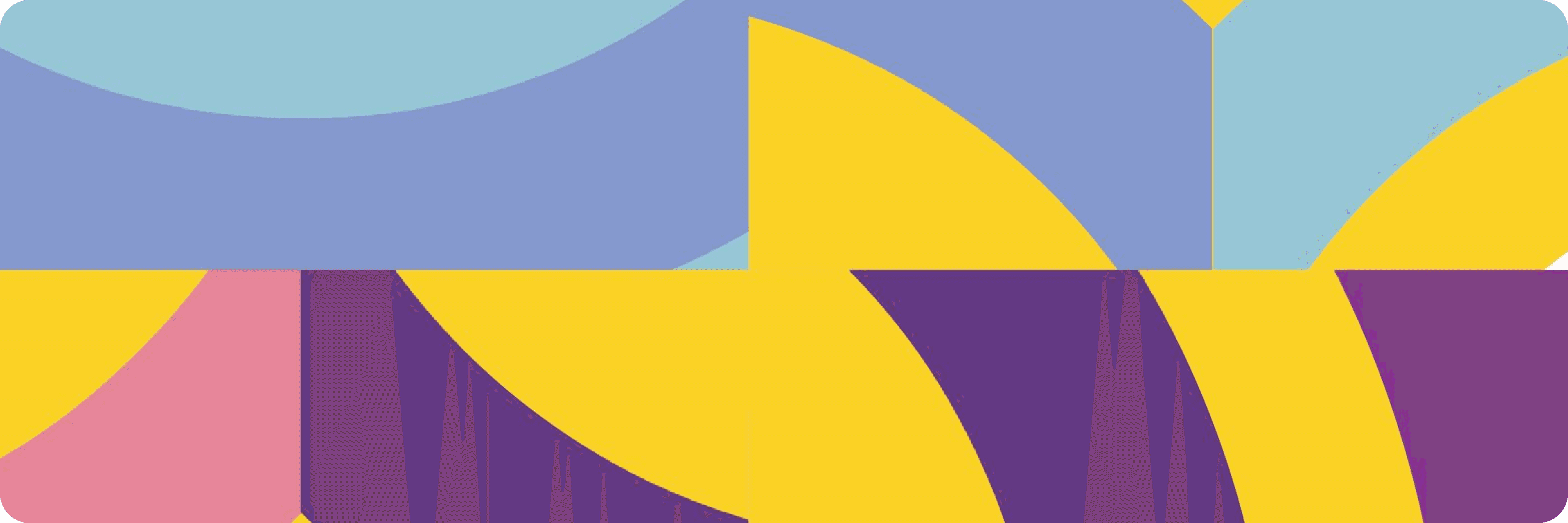
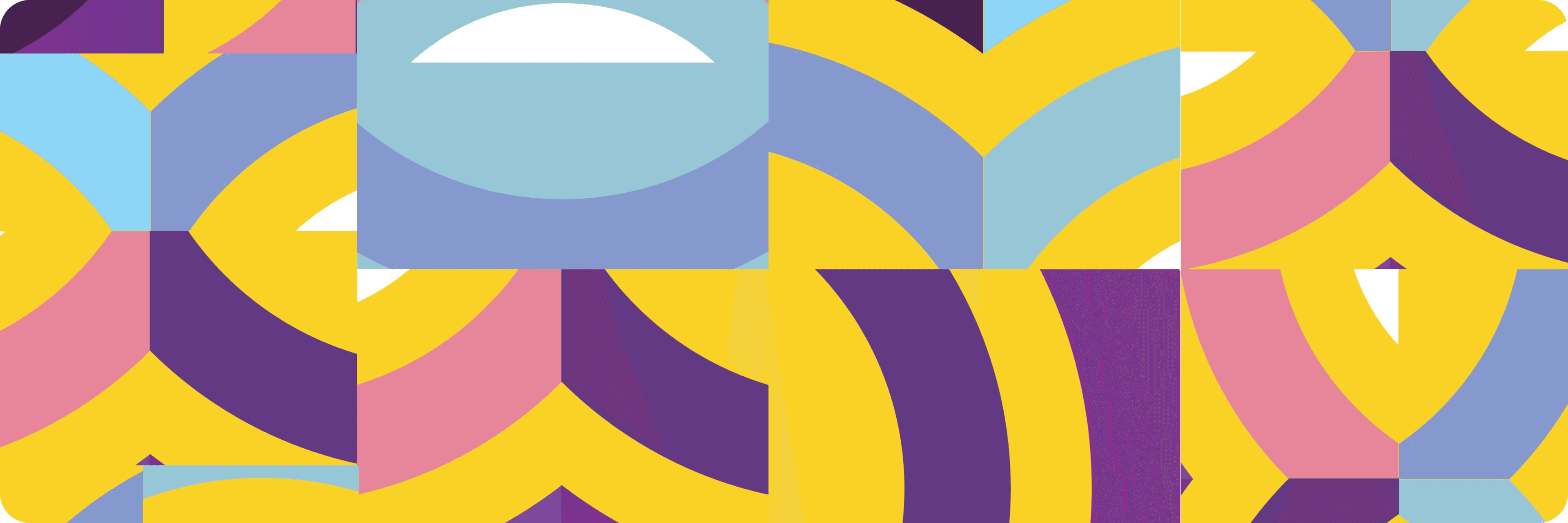
In application, the pattern is used to introduce depth, movement, and context across digital and physical touchpoints. It flexes in scale and density depending on use, sometimes acting as a subtle background texture and other times taking on a more expressive role. This controlled variability ensures consistency while allowing visual richness where appropriate. The pattern supports the brand without overwhelming it. It frames content, guides attention, and reinforces identity, while the logo remains the primary point of recognition. Together, the system creates a visual language that feels intentional, navigable, and grounded.
Overall, the logo, colour palette, and pattern work as a unified system. Each element reinforces Jojiverse’s purpose of making the metaverse feel structured, familiar, and accessible, not by simplifying it, but by giving it a visual logic people can trust.