
Multidisciplinary Designer
Now Playing
Kubsxyz
Working with a team on creating the future of work by superpowering organizations with cloud-based teams
You can always reach me at
+234-706-730-8739
Wagix is a financial infrastructure platform that helps businesses run payroll seamlessly while giving employees fair, structured access to credit. It sits at the intersection of payroll and lending, connecting employers and working individuals through a system designed to reduce friction, improve clarity, and rebuild trust. Rather than positioning itself as a traditional fintech product, Wagix serves as a stabilising layer, supporting businesses with reliable payroll tools and empowering employees with responsible financial access.
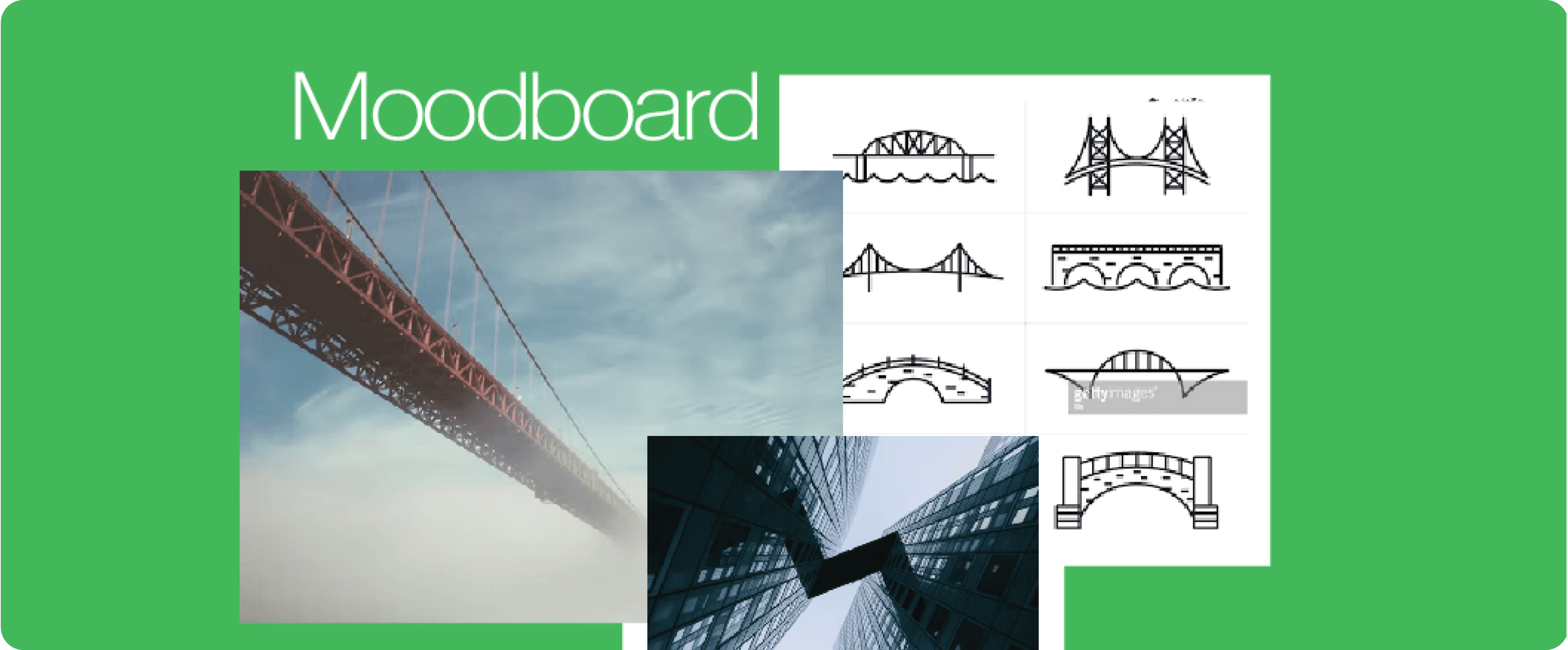
This moodboard translates the core idea behind Wagix into visual logic. At its centre is the bridge, not as decoration but as infrastructure. Bridges exist to connect separate entities, reduce friction, and enable safe movement. This directly reflects Wagix’s role between businesses and working individuals within payroll and credit systems.
The range of bridge forms reinforces a key idea: connection can take many shapes, but it must always be structurally sound. This principle informed the construction of the logo itself. The “W” was designed to feel load-bearing and balanced, prioritising reliability and stability over speed or aggressive disruption.
Architectural references emphasise engineering logic, alignment, and scalability, reflecting systems built to hold weight over time. This mirrors Wagix’s promise of clarity and dependability in a financial environment where ambiguity often erodes confidence.
A recurring sense of symmetry reflects Wagix’s dual responsibility. The brand must support both businesses and individuals without favour, acting as a stabilising layer rather than a biased intermediary. Restraint in tone and form signals longevity, calmness, and credibility, qualities essential for trust in financial products.
Overall, the moodboard establishes Wagix as infrastructure, not noise. It provides the conceptual foundation from which the logo and wider identity system were intentionally built.
The objective of the project was to define Wagix at a foundational level before moving to visual expression. Design needed to operate as infrastructure, a way to clarify intent, establish positioning, and create internal alignment around trust, responsibility, and usability.
Rather than starting with aesthetics, the focus was on identifying the real problem Wagix was solving, the behaviours it needed to enable, and the role it would play within a fragile financial ecosystem. Only once these foundations were clear could a meaningful identity system be developed, one capable of signalling trust, reducing friction, and supporting both businesses and individuals at scale.
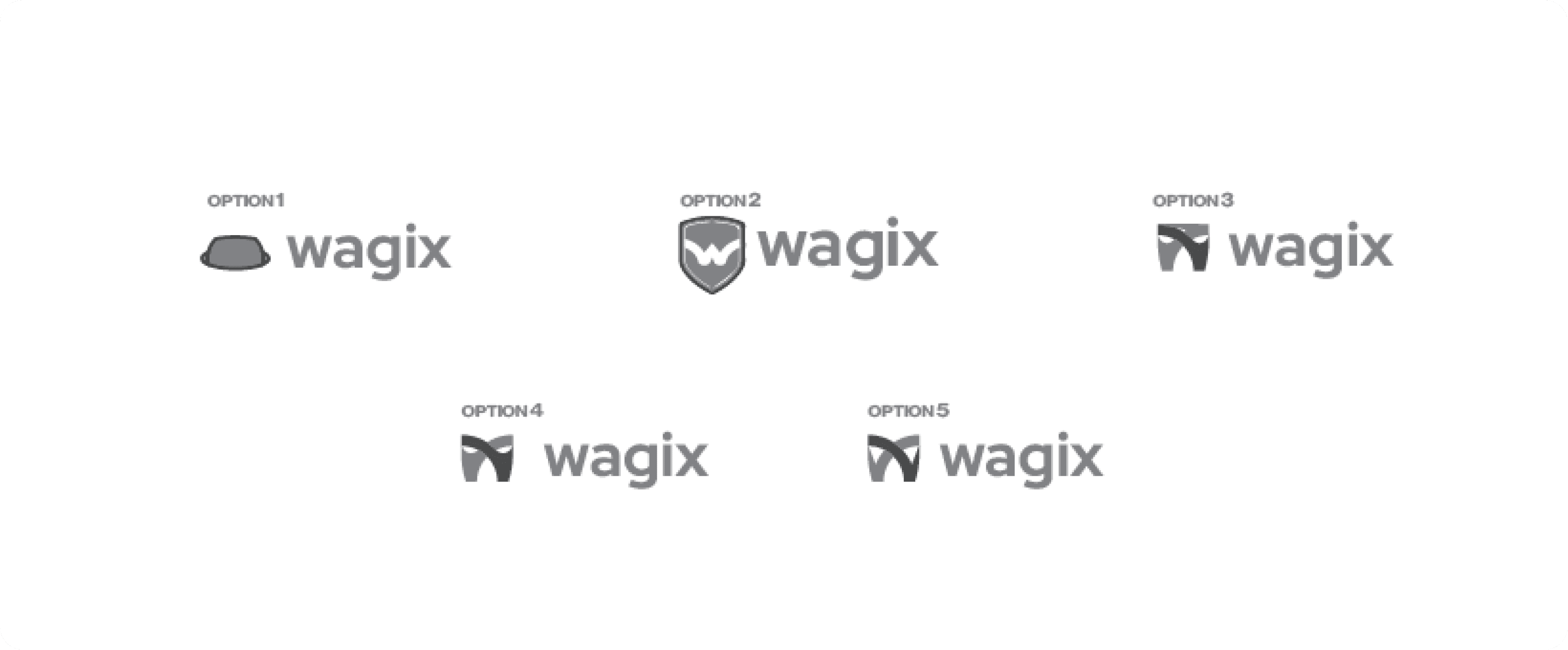
The early logo options explore different symbolic directions before committing to a final structural idea. Each option tested how Wagix could visually communicate trust, access, and dual responsibility without relying on decoration Concepts ranged from abstract forms to shield-like marks, helping clarify what felt too symbolic versus what could function as infrastructure.
Through this process, one insight became clear: Wagix did not need an emblem that spoke loudly. It needed a form that held weight.
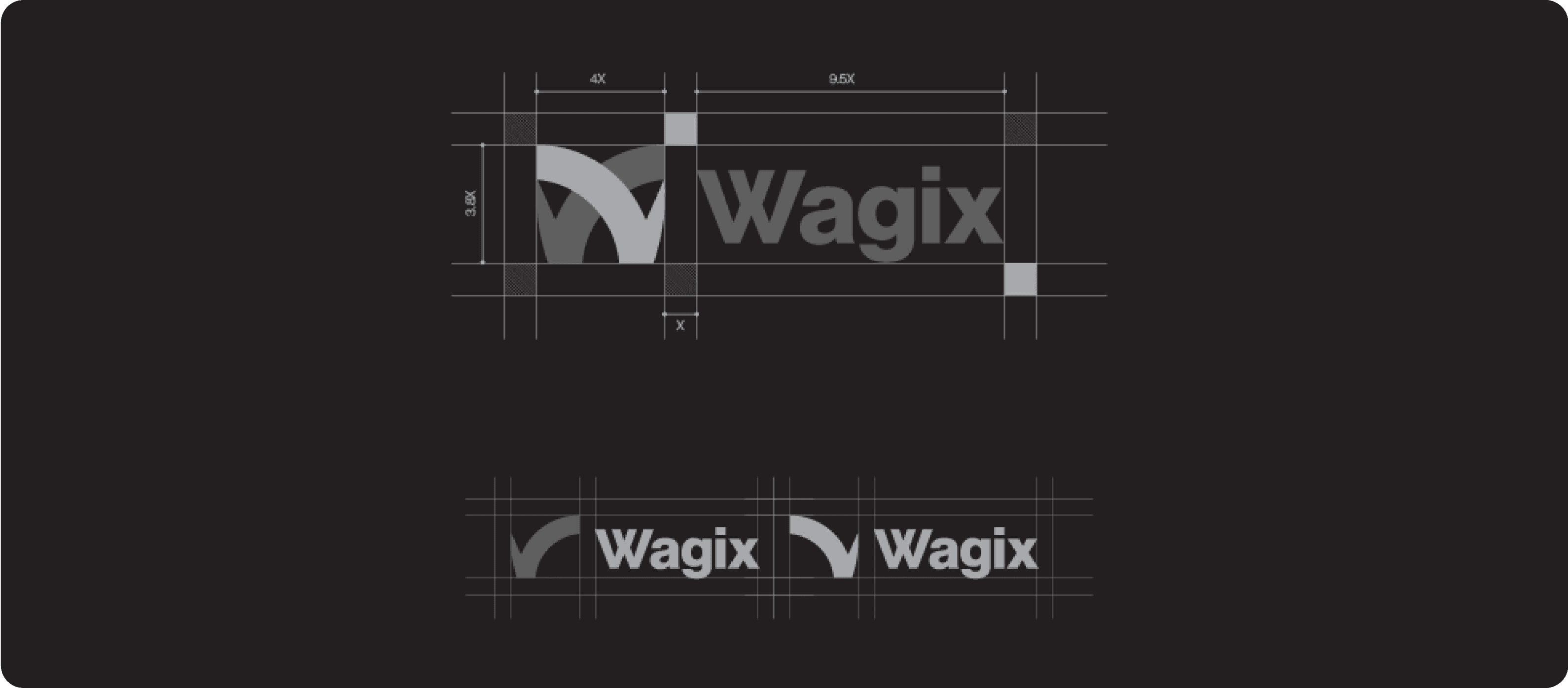
The final direction focuses on constructing the letter “W” as a bridge rather than illustrating one. The mark is built from intersecting arcs and precise geometric relationships, creating a sense of balance and load distribution. This reflects Wagix’s role as a system that supports two parties equally while remaining stable at the center.
The construction grid is not ornamental. Circular geometry was used to ensure consistency, proportion, and repeatability across sizes and contexts. Every curve resolves into another, reinforcing the idea of continuity and flow within the payroll and credit ecosystem.
Negative space plays an active role, creating clarity and separation between the two sides of the structure while maintaining a single, unified form. This mirrors Wagix’s function of connecting businesses and individuals without collapsing their roles. Overall, the logo is designed less as a symbol to be noticed and more as a structure to be trusted. It stands as a visual system that communicates reliability, balance, and long-term intent, aligning with Wagix’s position as financial infrastructure rather than surface-level branding.
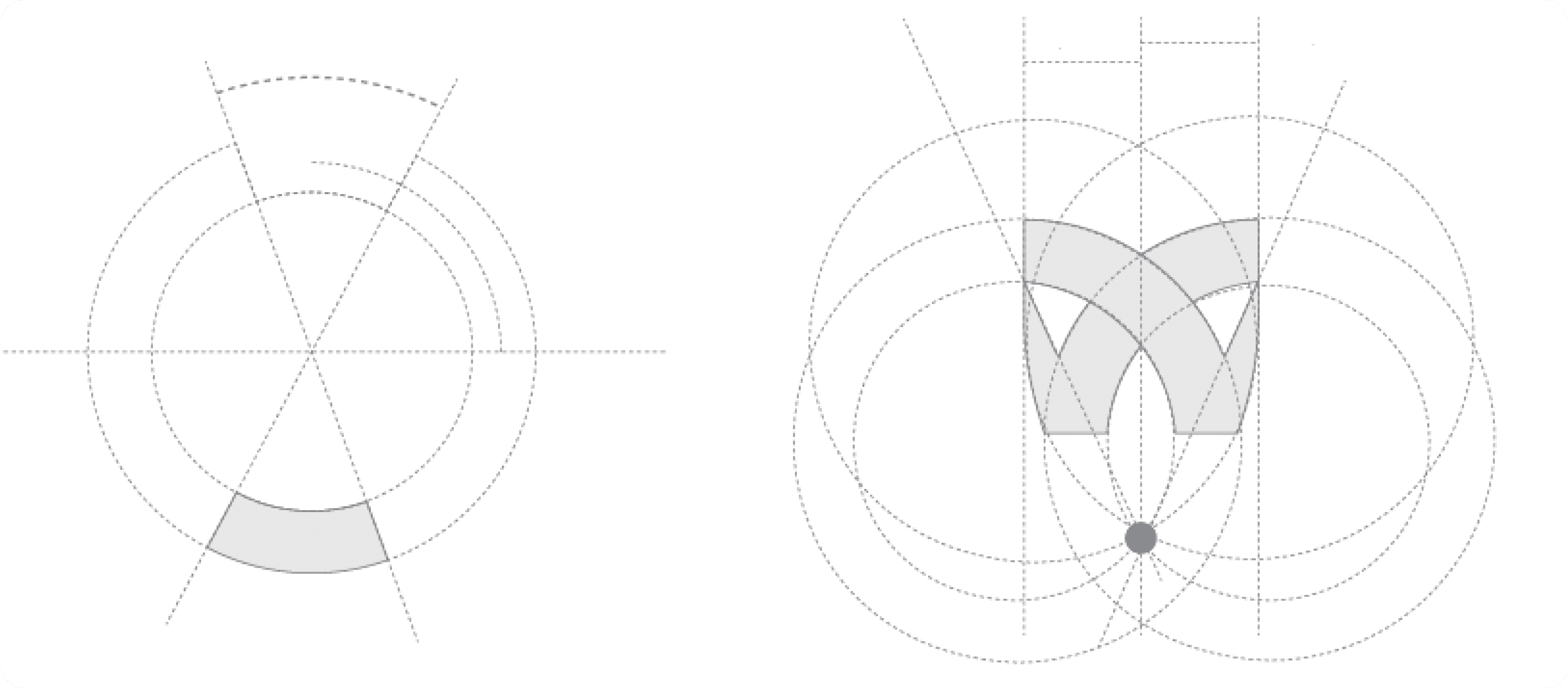
The identity system was designed as a bridge, not a badge. The core mark originates from the letter “W,” but its meaning extends beyond an initial. It was deliberately constructed to resemble a bridge, an enabling structure that allows movement, access, and continuity. Not something attention-seeking, but something dependable. Something you cross daily without having to think twice.
This logic reflects Wagix’s role within payroll and credit systems. The brand exists to connect two parties who depend on each other but rarely meet on equal or frictionless terms.
The visual system reinforces this dual purpose. Two distinct elements are clearly differentiated, representing businesses and individuals, held together by a structure that supports both equally. Neither side exists in isolation, and the identity reflects that interdependence. Colour differentiation was intentional, not decorative. It was used as a functional tool to establish clarity between roles within the payroll ecosystem and reduce ambiguity at every touchpoint.
The wordmark was designed with weight and stability, anchoring the symbol rather than competing with it. Every adjustment prioritised legibility, balance, and longevity because financial trust is built over time, not through trends.
Sketching played a critical role throughout the process. Forms were explored and iterated repeatedly, tested for symbolism, structural logic, and scalability. Nothing was rushed. Nothing was accidental. The outcome was not just a logo, but a visual framework capable of growing with the product.
This work gave Wagix more than an identity. It gave it alignment.
A brand that can explain itself clearly.
A system that visually reinforces its role as an enabler, not a barrier.
A foundation that allows the product to evolve without losing coherence. For users, the brand communicates reassurance and accessibility.
For users, the brand communicates reassurance and accessibility. For businesses, it signals structure and reliability.
For the organisation, it creates a consistent language for decision-making.
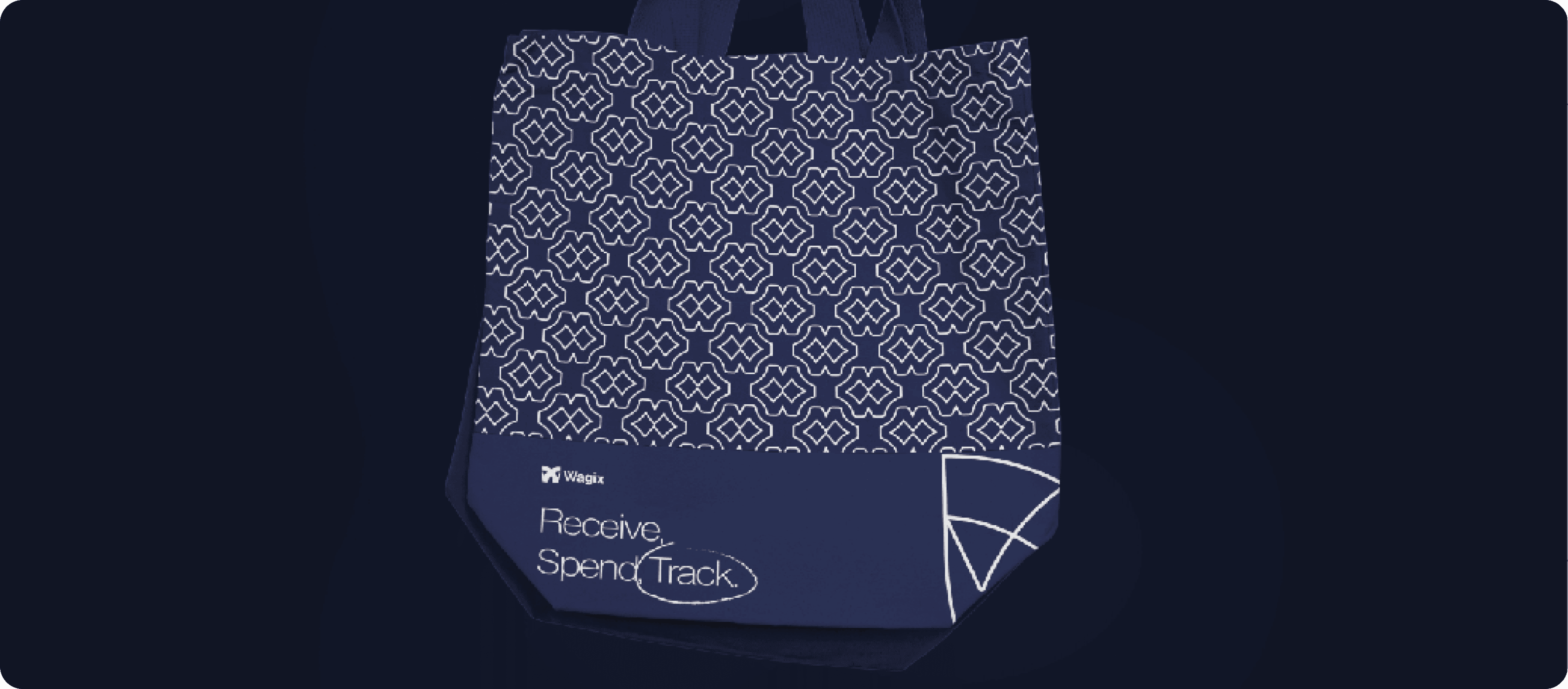
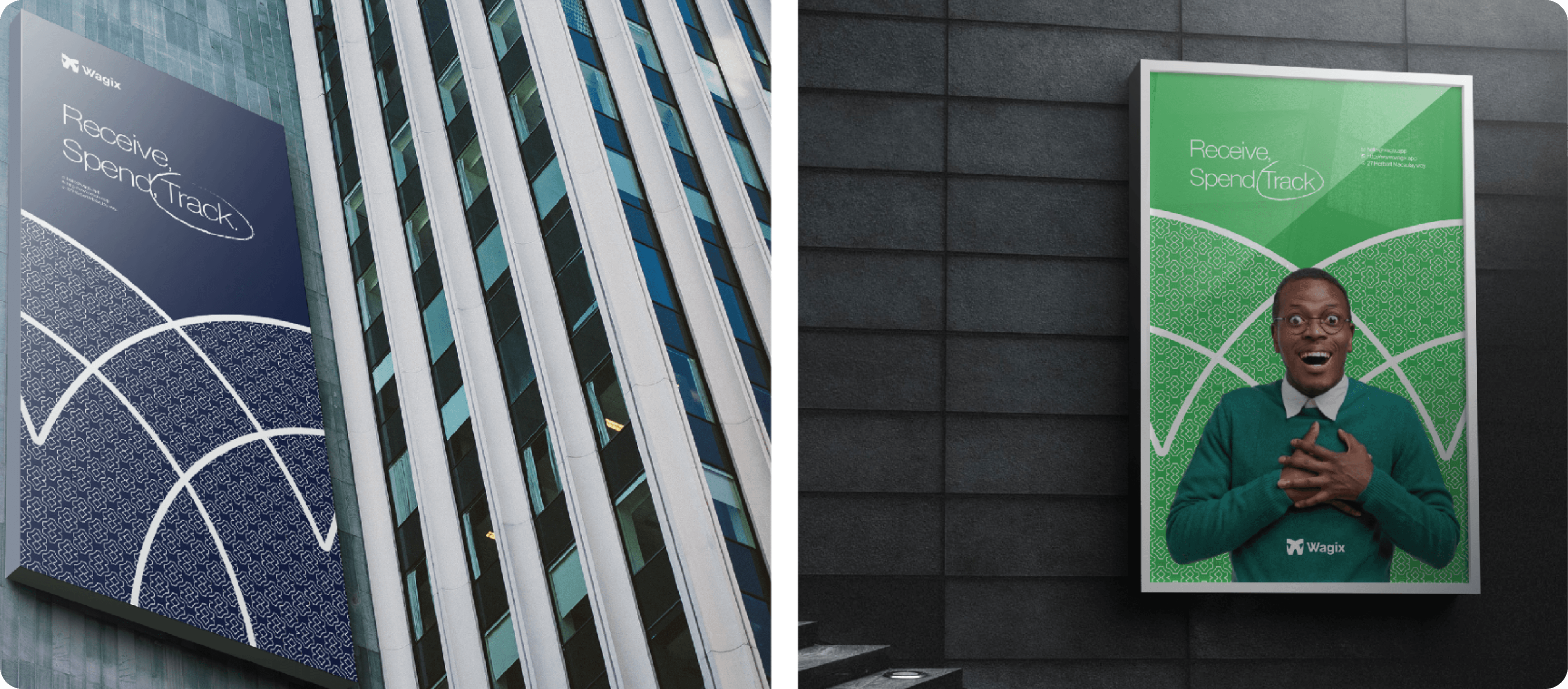
The identity was designed to work as a system, not a static mark. Across the website, product mockups, and supporting patterns, the same structural logic carries through. The geometry used in the logo expands naturally into modular patterns that can scale, repeat, and adapt without losing clarity. This ensures the brand remains consistent whether it appears on a dashboard, marketing page, payroll interface, or internal document.
The visual language holds together across digital touchpoints by relying on rules rather than decoration. Spacing, proportion, and repetition create familiarity, while restraint ensures the product remains the focus. The patterns function as quiet reinforcement, adding depth without introducing noise, and helping the brand feel intentional across different contexts and screen sizes.
Wagix now shows up not as just another fintech startup, but as a considered response to a real systemic gap. And this is where my role as a designer concludes: not as a decorator of interfaces, but as a strategic partner in shaping meaning, trust, and long-term relevance.